
Key Takeaways
- Admin tasks like manual scheduling, billing, and compliance eat into the time you should be spending with patients.
- Time-blocking and batching similar tasks are two of the simplest ways to take back control of your working day.
- A good practice management system does the repetitive work for you so your focus stays on patient care, not paperwork.
- Security and compliance should come built in not bolted on, when choosing a system for your practice.
- The less time you spend on admin, the more time you have for your clients and for yourself.
Running a private practice means wearing a lot of hats. You're the clinician, the administrator, the bookkeeper, and sometimes the IT support. When admin piles up, it's your patients and your own wellbeing that pay the price. A 2024 UK study published in QJM found that UK resident doctors spent 73% of their time on non-patient-facing tasks, with only 17.9% on direct patient care.
Poor private practice time management isn't inevitable. With the right habits and tools, you can cut your admin time significantly and get back to what you trained for. This guide covers where the time goes, how to win it back, and what to look for in a system that actually works.
The Biggest Time Wasters in Private Practice
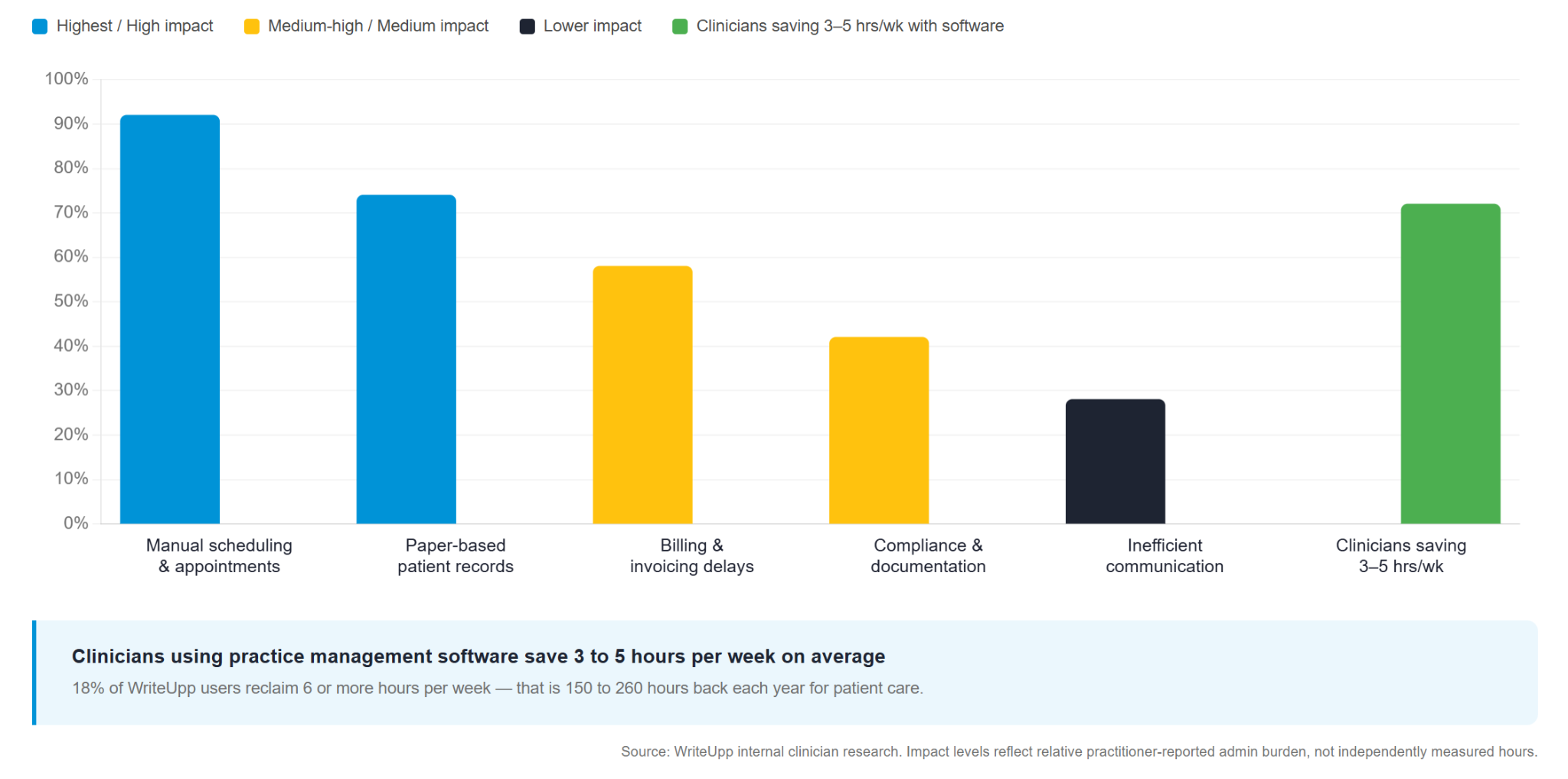
If your days feel longer than they should, chances are one of these five culprits is to blame.
- Manual scheduling and appointment management: Without an online booking system, appointment management becomes a cycle of phone calls, emails, and last-minute calendar juggling. According to NHS England, there were 8.1 million missed outpatient appointments across the NHS in 2024-25, every one an appointment slot that could have been reallocated with the right system in place.
- Paper-based patient records: Misfiled notes, illegible handwriting, and records that can't be accessed remotely all slow down your clinical workflow. The UK Government's Cyber Security Breaches Survey 2025 found health and social care had the highest rate of formal incident response planning of any sector, reflecting just how exposed patient data can be without the right systems in place.
- Billing and invoicing delays: Chasing payments manually and tracking what's outstanding across a spreadsheet drains time and creates errors. Even small billing mistakes can delay payment or damage your professional reputation.
- Compliance and documentation: Without a system built to support UK GDPR compliance, staying compliant means manually managing consent records, data access logs, and secure storage. All of these eat into clinical time.
- Inefficient communication: Email chains for confirmations. Phone calls to chase cancellations. When communication isn't joined up, the admin overhead multiplies. Automating these touchpoints is one of the fastest wins available.
Practical time management habits that make a real difference
A practice management system handles the admin. But how you structure your day matters just as much. These habits work alongside the right software to give you back even more control.
- Time-blocking: Divide your day into dedicated segments for client sessions, documentation, admin tasks, and breaks. Treat each block as non-negotiable, including your lunch break and end-of-day finish time.
- Buffer time between sessions: Build 10 to 15 minutes between appointments to write up progress notes and reset. Without it, session documentation backlogs build and spill into evenings.
- Batch your admin tasks: Group similar tasks together. Return calls in one block, process invoices in another. Switching between different types of work slows you down more than most practitioners realise.
- Focus on one thing at a time: Multitasking increases errors and reduces the quality of both clinical notes and admin work. Single-tasking is consistently more efficient.
- Set clear working boundaries: Define your hours and stick to them. When patients know when you're available, out-of-hours messages reduce significantly.
How does a private practice management system saves you time?
A good private practice management system doesn't just digitise your existing processes. It removes the friction from them entirely. Smart scheduling tools fill appointment slots without back-and-forth calls. Automated invoicing means you're never chasing payments manually. Reminders go out without you lifting a finger. Patient records are accessible in seconds rather than buried in a filing cabinet. And compliance is handled at the system level, so you're not running a separate checklist alongside your clinical work.
The result is a practice that runs more smoothly, with less manual effort from you at every step.
Choosing the right private practice management system
The market has no shortage of options. Here's what actually matters when you're making this decision.
- Can it grow with you?
A solo physio and a six-clinician multi-site practice have different needs. The system you choose should handle where you are now and where you're heading, without requiring a platform switch when your list grows. - Is it easy to use?
A complicated system adds admin rather than removing it. Look for something your team can pick up quickly, with onboarding support included and an interface that doesn't require a manual to navigate. - Is there good support?
At some point, something will need resolving. Fast, accessible support from a team that understands healthcare software is worth paying attention to when comparing options.
Take back your time with WriteUpp
WriteUpp is built specifically for private practitioners in the UK, including therapists, physios, GPs, and everyone in between. Here's what that looks like in practice.
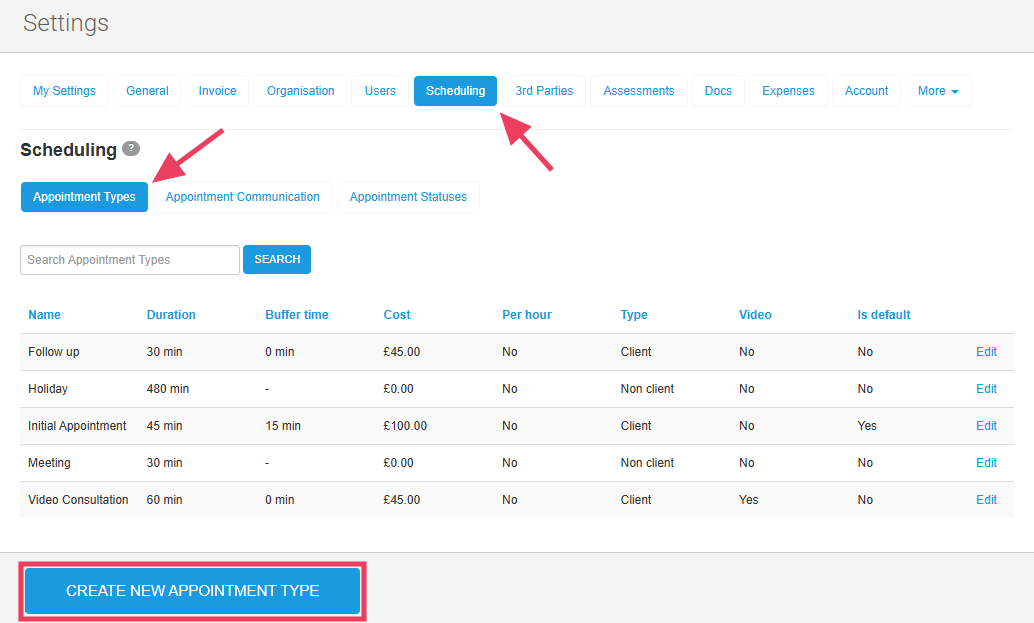
- Online booking and automated reminders: Your booking page lets patients book, cancel, and reschedule at any time without calling the practice. Automated SMS and email reminders go out before every appointment, cutting no-shows without any manual effort from your team.
- Paperless patient records and clinical notes: All records live in one secure, cloud-based system. Create and retrieve clinical notes quickly using customisable templates, accessible from any device, any time.
- Payment processing and invoicing: Take payments online or in person, send invoice links directly to clients, and track outstanding balances in real time. Billing becomes part of your workflow, not a separate task.
- Built-in video consultations: No third-party apps, no separate logins. Patients book and pre-pay for online sessions the same way they'd book in person, and all records stay in one place.
- Smart forms and digital paperwork: Send intake forms, digital consent forms, and assessments automatically after booking. Patients complete them before arriving, responses save directly to their record, and your admin workload shrinks to almost nothing.
- GDPR-compliant security: WriteUpp is ISO 27001-certified private practice software, with two-factor authentication, encrypted data replication, and full UK GDPR compliance built in.
Real results: How WriteUpp helped Berny Sansome stay organised
For many private practitioners, managing admin while focusing on client care can be a challenge. Psychotherapist Berny Sansome knows this struggle well. Since launching her counselling practice in Manchester in 2020, she had worked hard to balance client sessions, paperwork, and compliance, until she found WriteUpp.
The challenge: keeping everything organised and secure
Before using WriteUpp, Berny relied on paper-based records, which presented several challenges. She needed a more secure, efficient, and professional way to manage her practice. After hearing about WriteUpp from fellow counsellors in social media groups, she decided to give it a try.
The solution: a simple, secure system
Berny signed up for WriteUpp's free trial and was immediately impressed:
- Easy to use: she quickly felt comfortable navigating the system
- Secure and paper-free: no more worries about misplaced client records
- Seamless diary management: keeping track of appointments became effortless
The results: a more organised practice
With WriteUpp, Berny transformed the way she runs her business:
- Diary management made simple: she can now easily schedule appointments, reducing admin stress
- Hassle-free invoicing: WriteUpp helps her manage payments efficiently, even offering a view of projected income
- Enhanced data security: client information is now safely stored in the cloud, eliminating paper-based risks
"I feel so much more organised!"
Berny describes WriteUpp as "simple to use" and loves features like template letters and the chat function for quick support. She spends less time on admin and more time focusing on what really matters: her clients.
Spend less time on admin and more time with your patients
Private practice admin will never disappear entirely, but it doesn't have to dominate your week. The practitioners who get time management right aren't working harder or longer hours. They've put a cloud-based practice management system in place that handles the repetitive, time-consuming work automatically.
Sorted scheduling. Paperless records. Invoices that send themselves. Reminders that go out without a second thought. That's what good private practice time management looks like in practice, and it's what WriteUpp is built to deliver.
Sign up for a free 30-day trial and see how much time you can reclaim each week. No credit card required.
Frequently asked questions
How much time can a practice management system save?
WriteUpp's own research found that most clinicians save between 3 and 5 hours per week using practice management software, with some reclaiming 6 or more hours. Over a full year, that's over 150 hours, nearly a full month of working days.
Is practice management software worth it for a solo practitioner?
Yes, and often more so than for larger teams. Every hour spent on admin is an hour not spent with clients. A system that saves three hours a week pays for itself within days at any reasonable hourly rate.








Join over 50,000 clinicians that we've helped using WriteUpp
Start my free trial