
How to Choose a Compliant EMR in Canada
Choosing an electronic medical record (EMR) or practice management platform is no longer just about scheduling, notes, and billing.
For Canadian clinicians, privacy legislation, patient trust, and data security have become critical parts of the decision-making process.
As concerns around data residency, AI tools, third-party integrations, and cross-border data transfers continue to grow, many practitioners are reassessing whether their current software meets both their compliance obligations and their expectations for transparency.
This guide explains what Canadian healthcare professionals should look for when evaluating an EMR, what legal requirements apply, and the questions every clinic should ask before choosing a platform.
What Are Canadian Clinicians Legally Required to Have?
Short Answer
Canadian clinicians must take reasonable steps to protect personal health information and comply with applicable privacy legislation.
The specific requirements vary by province, but most clinicians will be subject to one or more of:
- PIPEDA
- PHIPA (Ontario)
- HIA (Alberta)
- FIPPA legislation in certain provinces
- Provincial college and regulatory body requirements
While legislation differs, the expectations are broadly similar:
- Secure storage of patient information
- Controlled access to records
- Protection against unauthorized disclosure
- Appropriate safeguards for electronic records
- Ability to respond to privacy incidents
- Transparent handling of patient information
Does Patient Data Need to Be Stored in Canada?
Short Answer
Not always.
However, many clinics increasingly prefer Canadian-hosted solutions due to privacy concerns, patient expectations, and provincial guidance.
Some provinces impose additional requirements or scrutiny regarding cross-border data transfers.
Even where offshore hosting is permitted, clinicians remain responsible for ensuring patient information receives appropriate protection.
This means clinicians should always understand:
- Where data is stored
- Where backups are stored
- Which subcontractors process data
- Whether data may be accessed outside Canada
Why Data Residency Is Becoming a Bigger Issue
Historically, many healthcare software providers stored data in the United States.
However, several factors have changed clinician attitudes:
- Increased awareness of privacy legislation
- Growth of AI-powered healthcare tools
- Greater scrutiny of third-party vendors
- Patient concerns around international data transfers
- Regulatory guidance around risk management
As a result, many clinics now specifically seek vendors that offer Canadian data hosting or clear documentation explaining how data is handled.
10 Questions Every Canadian Clinic Should Ask an EMR Vendor
1. Where Is Patient Data Stored?
Ask vendors:
- Which country hosts patient data?
- Which cloud provider is used?
- Are backups stored in the same country?
If the answer is unclear, continue asking questions.
2. Can You Provide a Data Processing Agreement?
Every reputable software vendor should clearly document:
- Responsibilities
- Data ownership
- Security obligations
- Incident response procedures
3. How Is Data Encrypted?
Look for:
- Encryption at rest
- Encryption in transit
- Secure backup encryption
4. What Happens If There Is a Data Breach?
Vendors should have:
- Incident response plans
- Notification procedures
- Security monitoring
5. Who Can Access My Data?
Ask specifically about:
- Vendor employees
- Technical support teams
- Third-party contractors
- AI providers
6. How Are AI Features Managed?
This has become one of the most important questions in healthcare technology.
Clinicians should understand:
- Whether patient data is used to train AI models
- Which AI providers are involved
- How information is processed
- Whether patient information leaves Canada
7. Is Access Protected by Multi-Factor Authentication?
Strong authentication should be considered essential.
8. Are Audit Logs Available?
Audit trails help clinics understand:
- Who accessed records
- When records were changed
- What actions were taken
9. What Security Certifications or Standards Do You Follow?
Examples include:
- SOC 2
- ISO 27001
- Cybersecurity frameworks
- Independent security testing
10. Can You Clearly Explain Your Privacy Policy?
If a clinician cannot easily understand:
- where data is stored,
- who can access it,
- how it is protected,
that should be considered a warning sign.
Transparency matters.
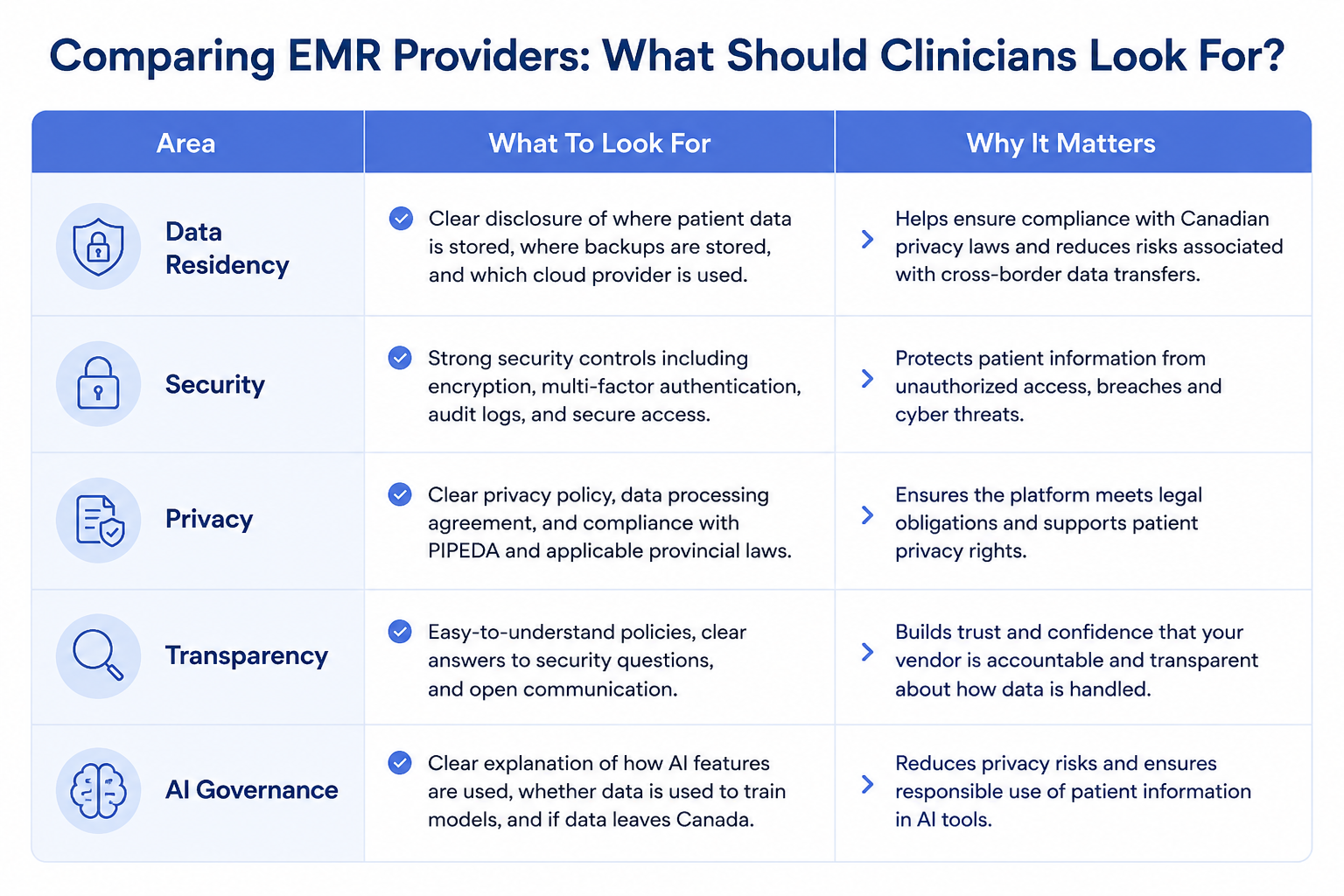
Comparing EMR Providers: What Should Clinicians Look For?
Why More Canadian Clinicians Are Reviewing Their Software
Across the healthcare technology industry, clinicians are asking tougher questions than they did five years ago.
The conversation has shifted from:
"Can this software manage my appointments?"
to:
"Can I trust this platform with sensitive patient information?"
That shift is driving clinics to perform more rigorous due diligence before selecting or renewing software providers.
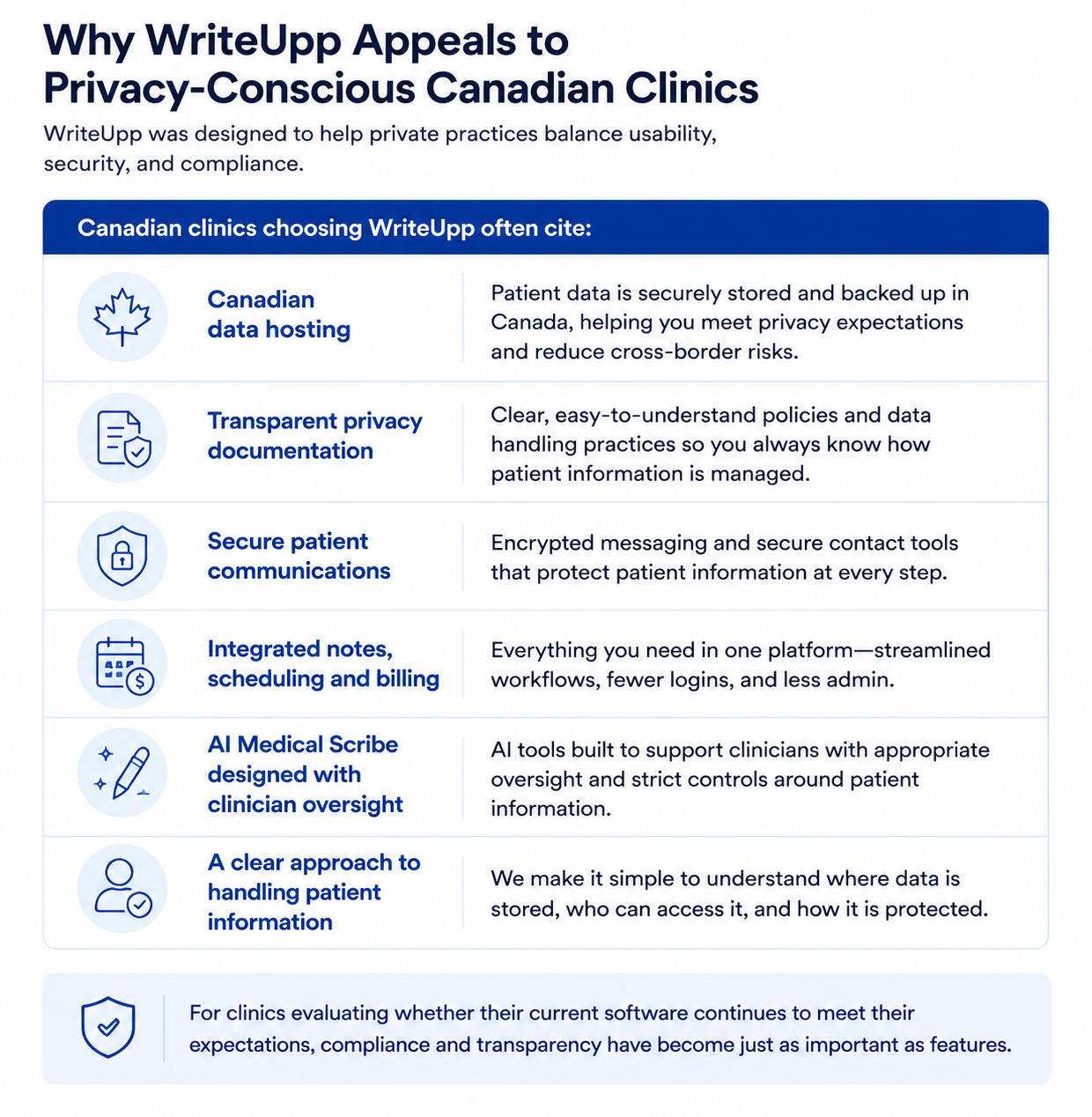
Why WriteUpp Appeals to Privacy-Conscious Canadian Clinics
WriteUpp was designed to help private practices balance usability, security, and compliance.
Want to chat to the team and learn more about WriteUpp? Book a demo here.
Frequently Asked Questions
What is the most important compliance feature in an EMR?
There is no single feature. Clinicians should evaluate data residency, encryption, access controls, audit logs, privacy documentation, and vendor transparency together.
Can Canadian patient data be stored outside Canada?
In many cases, yes. However, clinicians remain responsible for ensuring appropriate safeguards and complying with applicable legislation.
What should I ask an EMR vendor about data security?
Ask where data is stored, who can access it, how it is encrypted, how breaches are handled, and whether AI tools process patient information.
Is Canadian data hosting required?
Not always. However, many clinics prefer Canadian-hosted solutions because they simplify privacy considerations and align with patient expectations.
How do I know if my EMR is compliant?
Review the vendor's privacy documentation, security controls, hosting arrangements, contracts, and data handling policies. If important information is difficult to obtain, that may warrant further investigation.

.png)

.png)
.png)



Join over 50,000 clinicians that we've helped using WriteUpp
Start my free trial