
Key Takeaways
- Caseload management is about finding a client load that is financially sustainable, clinically effective, and personally manageable, not simply seeing as many patients as possible.
- Map your real availability first. Your ideal client load follows from your actual schedule, not the other way around.
- A waitlist is a management tool, not a problem. Handled well, it protects the quality of care you deliver to existing clients.
- Admin overhead shrinks your capacity. A caseload management tool that automates scheduling, notes, and billing gives you more usable time each week.
- Review your caseload regularly. What works at one stage of your practice may not work six months later.
Most private practitioners reach a point where the caseload starts to feel unmanageable. Sessions back to back, notes spilling into the evening, admin building up between clients. The instinct is to push through, but that approach has a cost, and it tends to show up in the quality of patient care before it shows up anywhere else.
Caseload management in private practice is not about seeing fewer clients. It is about being clear on how many clients you can see well, and building a working structure around that number. Get it right and your practice runs more smoothly, your clients get better care, and you are far less likely to hit the wall.
What is caseload management and why does it matter?
Caseload management is the process of planning, organizing, and maintaining the number of clients or patients you see at any given time. It covers decisions about how many clients you take on, how you structure your working week, how you handle demand when it exceeds your capacity, and how you stop admin from eating into clinical time.
Private practitioners do not have a fixed schedule or a line manager setting their hours. The structure has to come from you. Without it, the default is reactive: taking on clients as they come, fitting admin in wherever it fits, and hoping the week holds together. Workload management in private practice is self-directed, which means the consequences of getting it wrong land directly on you.
The cost of getting it wrong
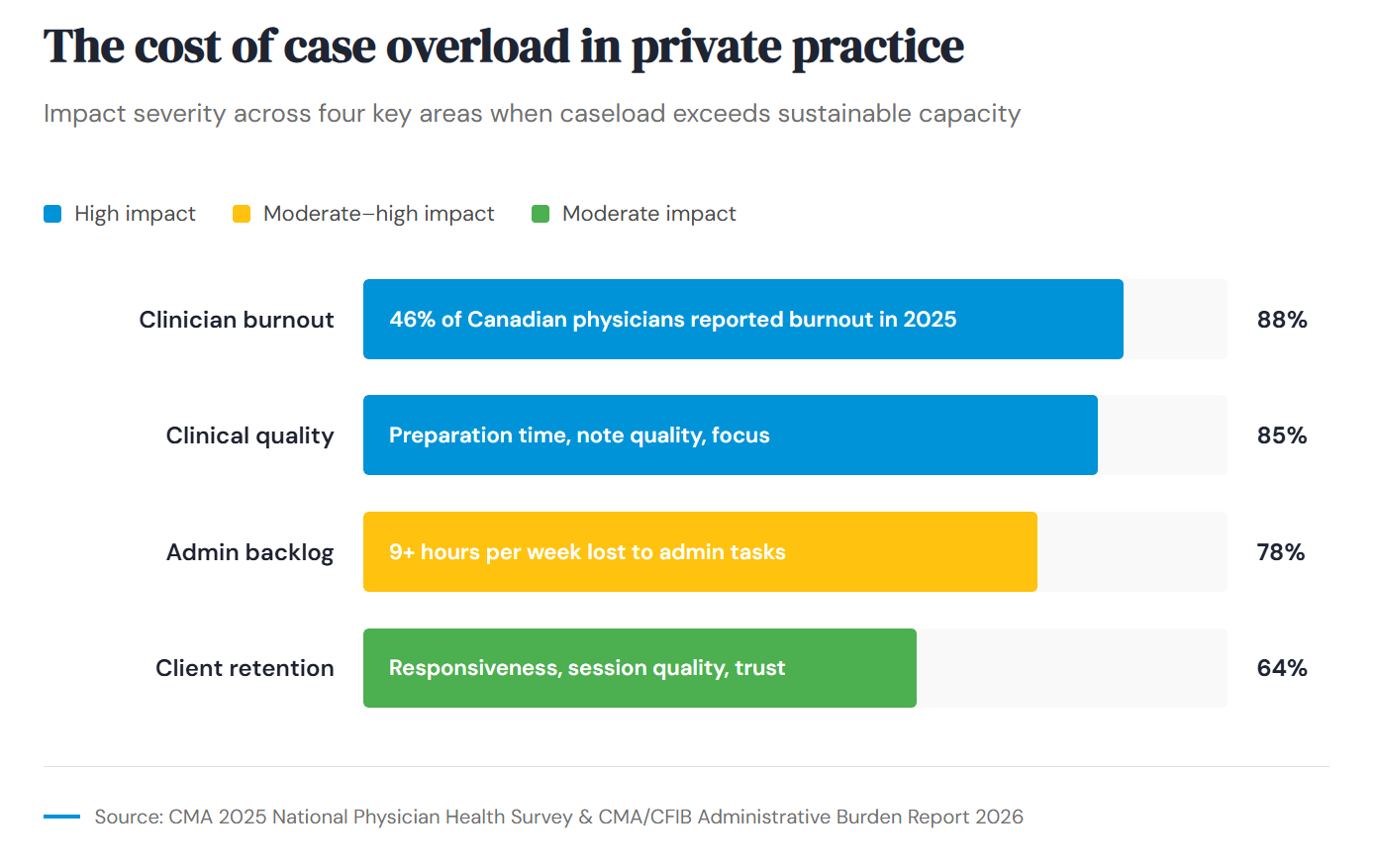
Case overload creates a chain of problems:
- Clinical quality drops. Preparation time shrinks, notes get written under pressure, and the mental space needed for effective practice narrows.
- Admin accumulates. Invoices, records, and correspondence pile up, and the backlog itself becomes a source of stress.
- Clinician burnout sets in. Working beyond your capacity for long enough stops feeling sustainable and starts feeling unavoidable. Almost half of Canadian physicians reported experiencing burnout in 2025, with excessive workload and administrative burden cited as the primary contributing factors.
- Clients notice. Responsiveness drops, session quality suffers, and retention falls.
The principles of caseload management
Before working out the right number of clients, it helps to be clear on the principles that should guide that decision.
- Capacity over ambition. Your caseload should reflect what you can genuinely deliver, not what you feel you ought to be delivering. There is no universal right number. A counsellor seeing 50-minute sessions has a different capacity ceiling to a physiotherapist running 30-minute appointments.
- Quality sets the ceiling. The point at which adding one more client would reduce the quality of care is your upper limit. Income targets and waiting lists should not move that ceiling.
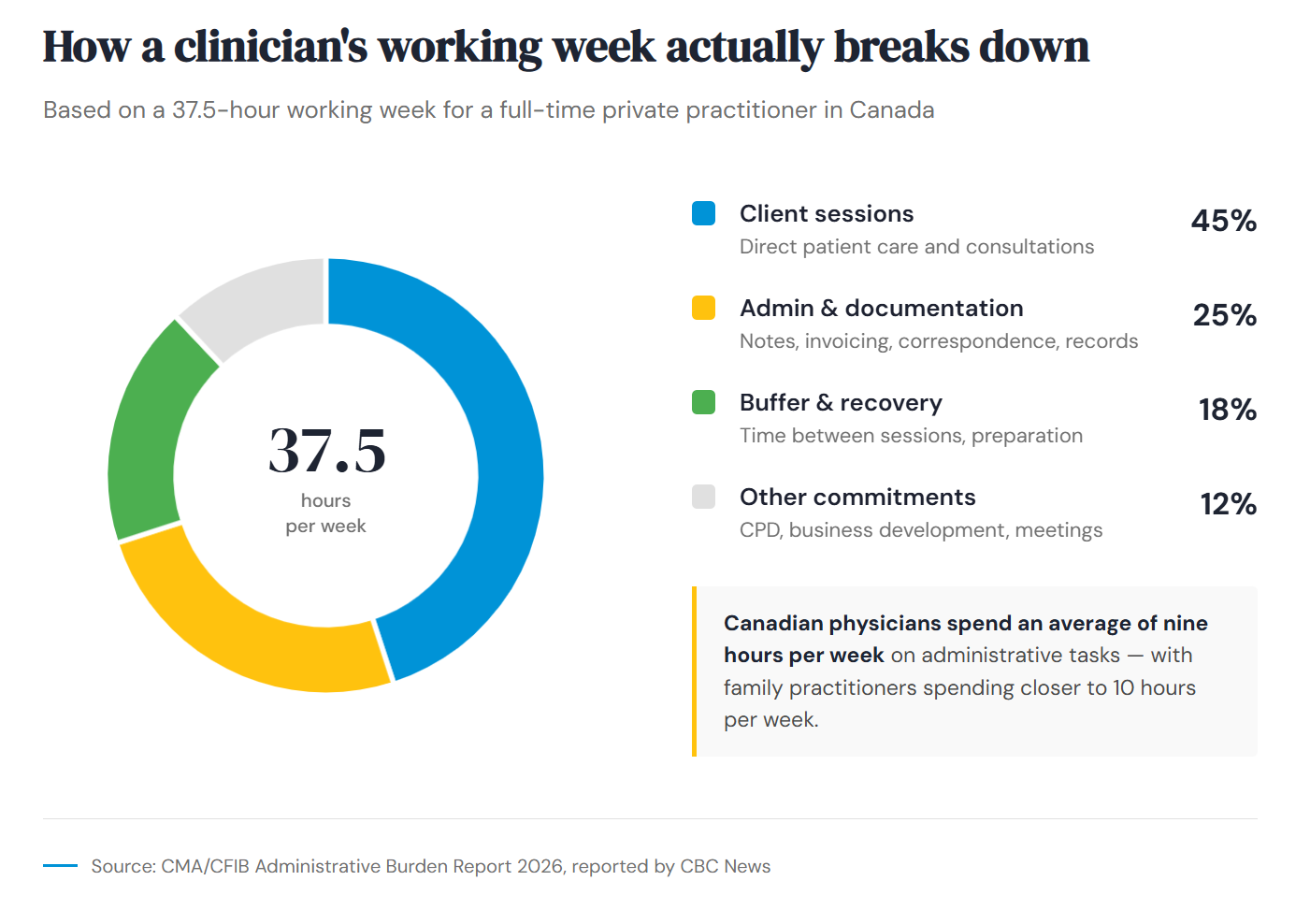
- Admin is part of the caseload. Every client session generates a note, an invoice, and often a letter or referral. A caseload that only counts session hours will consistently underestimate the actual workload. Canadian physicians spend an average of nine hours per week on administrative tasks, with family practitioners spending closer to 10 hours per week, according to a joint report by the CMA and the Canadian Federation of Independent Business.
- Sustainability over time. A caseload that is manageable in a good week but falls apart in a difficult one is not sustainable. Build in enough headroom to absorb the unexpected.
How to manage your caseload effectively
Step 1: Map your real availability
Start with your actual week, not your ideal one. List every standing commitment, personal, professional, and administrative, and calculate how much time is genuinely left for client-facing work. Most practitioners find this number is smaller than assumed, and it is far better to know that before you overcommit.
Step 2: Set your ideal client load
Once you know your available hours, work out how many clients you can see per week while leaving time for notes, admin, and recovery between sessions. A rough calculation: available clinical hours divided by average session length gives you your maximum weekly case count. Set a target below that maximum, not at it. The gap gives you room to absorb cancellations and stay on top of admin.
Step 3: Build a waitlist and triage system
When demand exceeds your capacity, a waitlist is the right response. Without one, your options are overcommitting or turning clients away with no plan. A well-managed waitlist protects patient flow through your practice and gives prospective clients a clear, fair process. In 2024–2025, 1 in 10 Canadians referred for community mental health counselling waited longer than four months for their first appointment, and when provincial health system wait times grow, more people turn to private practitioners. Not every client on a waitlist is equally urgent, so having a simple triage process for assessing urgency and a policy for what triggers a referral elsewhere is part of managing responsibly.
Step 4: Set boundaries and a no-show policy
A caseload that looks manageable on paper quickly falls apart if cancellations and no-shows are not handled consistently. A clear no-show and late cancellation policy, communicated to clients from the outset, protects your time and your income. Missed appointments are a persistent challenge for private practitioners across Canada, and even a handful of no-shows each week adds up quickly in lost revenue and wasted time. Your policy does not have to be punitive, but it does have to be consistent.
Step 5: Use a caseload management tool to reduce admin
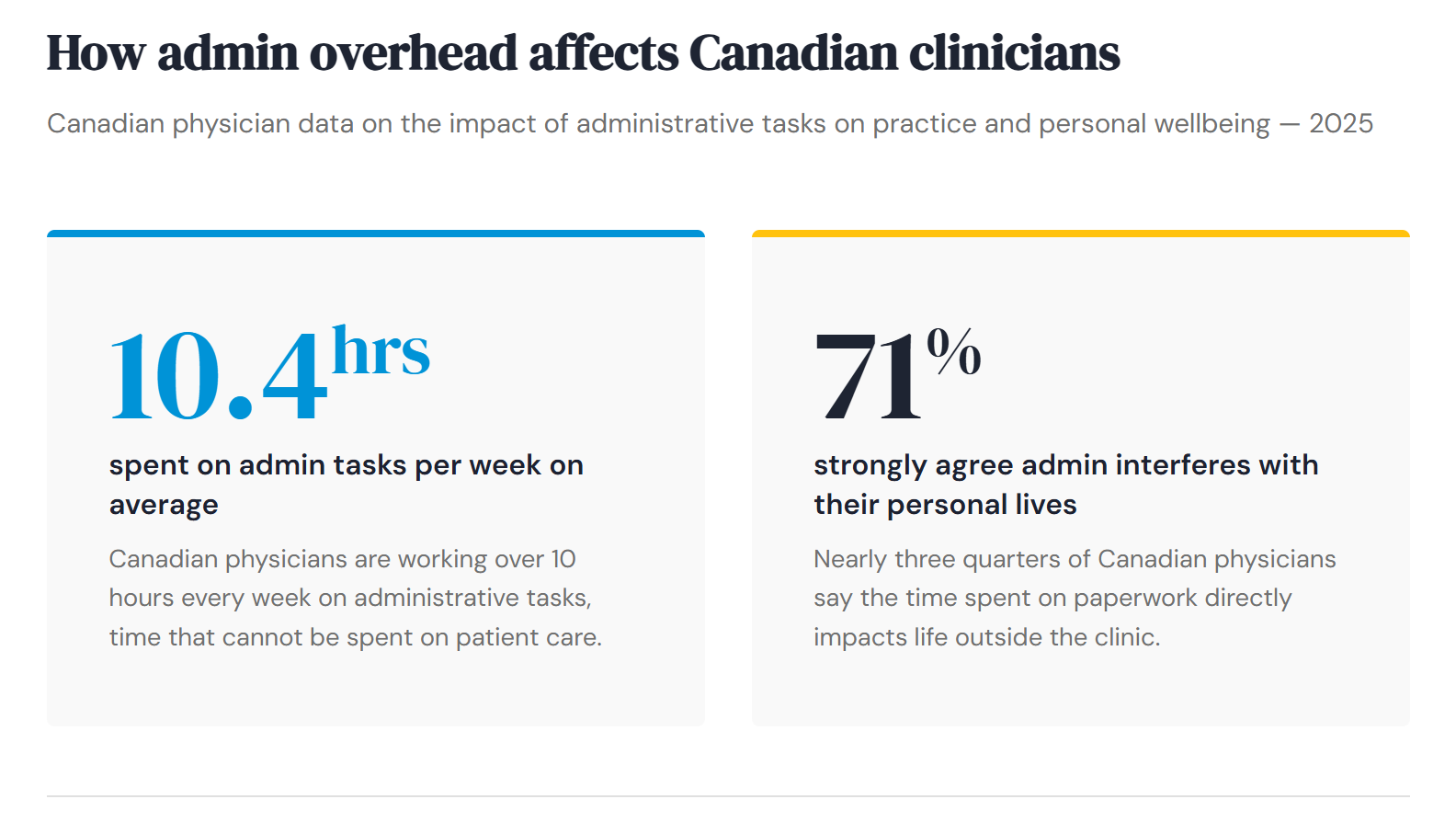
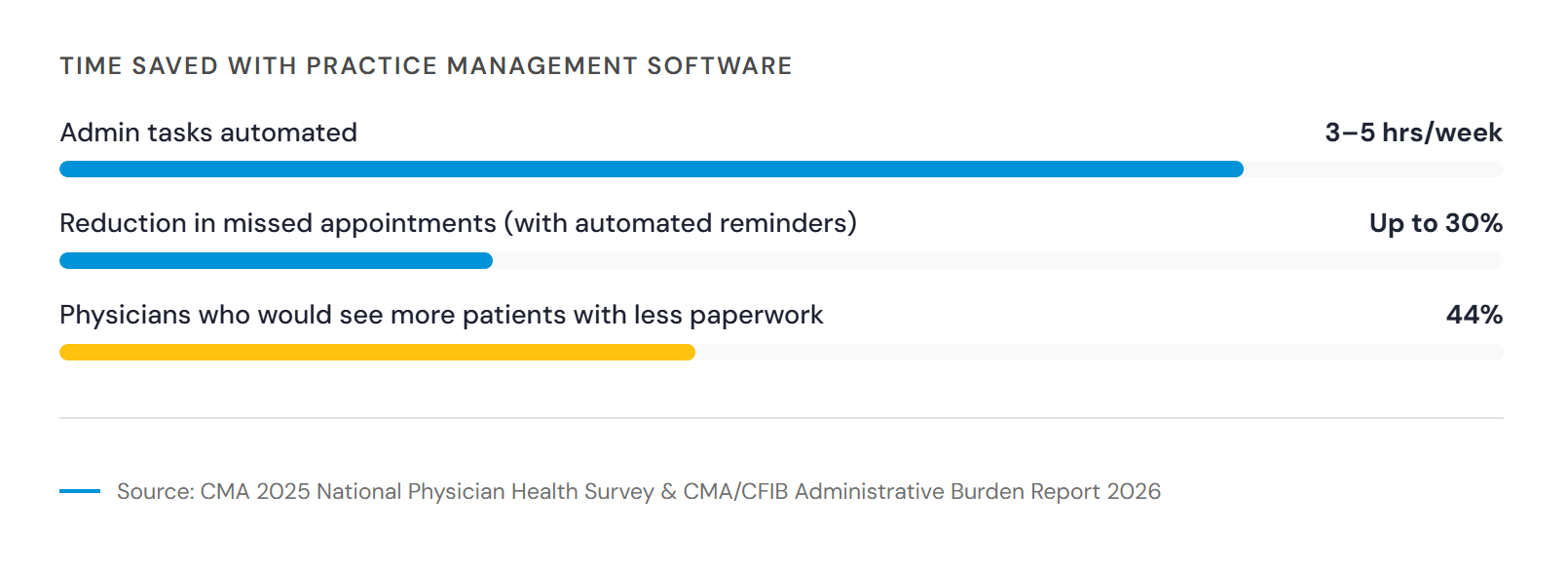
When scheduling, notes, invoicing, and client communication are all handled manually, each client adds a significant hidden time cost on top of the session itself. Canadian physicians are working an average of 10.4 hours per week on administrative tasks, with 71% strongly agreeing that the time spent on paperwork interferes with their personal lives. Good case management software brings these tasks into one place and removes much of that overhead. Practitioners using integrated practice management software report saving between three and five hours per week on admin tasks alone.
Step 6: Connect caseload decisions to your billing workflow and review regularly
Your caseload and your billing are closely connected. If your income target requires you to see more clients than your capacity supports, the gap will not close by pushing harder. It closes by reviewing your fees, adding supplementary income streams, or reducing time lost to manual invoicing and payment chasing. Build a monthly review into your schedule to check whether your caseload is still working and adjust before the pressure becomes a problem.
Step 7: Know when to bring someone else in
If the caseload still feels like too much after working through the steps above, there may simply be more work than one person can do well. Taking on a second clinician or an administrator is how solo practices become clinical teams. Continuing to work beyond capacity costs you clinically, personally, and ultimately in the quality of the practice you have built.
Caseload management made easier with WriteUpp
Managing a caseload well depends partly on having the right tools. When scheduling, notes, invoicing, and client communication are fragmented across different systems, admin expands to fill whatever time is available.
WriteUpp is practice management software built for private healthcare practitioners in Canada. It brings the operational side of your practice into one secure, PIPEDA-compliant platform, so admin takes far less of your time.
- Online booking. Clients book into slots you make available, with time blocked out for admin or personal commitments, so your diary reflects your actual capacity.
- Diary management. View and control your full schedule in one place, manage recurring appointments, and keep a waiting list without juggling separate systems. Automated reminders go out before each session, reducing no-shows without manual effort.
- Smart forms. Send intake forms, consent documents, and assessments before appointments. Less admin on the day, with all case details stored against the client record automatically.
- Payment processing. Invoices are generated from session data and payments tracked in one place, so billing stays connected to your caseload rather than becoming a separate task to chase.
- Security and compliance. ISO 27001 certified and PIPEDA compliant, so your client data is protected without additional overhead.
When the system handles the routine work, you have the headroom to manage what actually requires your judgment.
Read how Laura Newman uses WriteUpp to manage her caseload.
Start managing your caseload with confidence
Getting the case management process right is an ongoing effort, not a one-time fix. Map your real availability. Set a client load your capacity can genuinely support. Build a waitlist before you need one. Handle no-shows consistently. Use a tool that takes the admin weight off your week.
If your caseload is already feeling stretched, start with one step. Recalculate your available hours. Try a practice management system that puts your scheduling, notes, and billing in one place.
Sign up for a free 30-day trial of WriteUpp, no credit card required, and take a practical first step towards a caseload that works for you and your clients.

.png)

.png)
.png)



Join over 50,000 clinicians that we've helped using WriteUpp
Start my free trial