
Patient Management in General Practice: What Works and What Slows You Down
Key Takeways
- Patient management covers more than appointments. Records, care plans, scheduling, billing, and compliance all need to connect. Disconnected tools create gaps that cost time and affect care.
- Your records are only useful if they are accurate and accessible. A single complete record per patient, updated in real time, reduces errors and saves consultation time.
- Scheduling and patient flow directly affect revenue. Online booking, automated reminders, and waiting list tools reduce gaps in your diary without adding manual work.
- Patient care plans keep care consistent. Good clinical documentation supports continuity, especially when patients see more than one member of your team.
- UK GDPR makes you a data controller. You are responsible for how patient data is collected, stored, and protected, regardless of practice size.
Running a general practice means carrying two jobs at once. There is the clinical work, and there is everything else. The appointments, the records, the billing, the forms, the compliance. And when the admin side starts to slip, it does not just create extra work. It starts to affect the care you can deliver.
Patient management software sits at the centre of all of this. How you manage your general practice patients, from the moment they book to the moment you close their notes, shapes both your day and their experience. This post looks at what good patient management in general practice looks like in practice, where things tend to go wrong, and how the right tools change the picture.
What is patient management in general practice?
Patient management is the full set of processes involved in delivering care to general practice patients. As the first point of contact in primary care, GP practices carry a significant administrative load alongside their clinical responsibilities. Patient management covers how appointments are booked and confirmed, how records are created and maintained, how care plans are documented, how payments are handled, and how your practice meets its data protection obligations.
In a well-run practice, these processes connect smoothly. A patient books online, their record is ready when you need it, your notes are stored securely, and invoicing follows the appointment without chasing. In a poorly run practice, each of these steps becomes its own source of friction.
A patient management system handles much of this in one place. But the system only works as well as the processes behind it.
Why patient management matters more than most practitioners realise
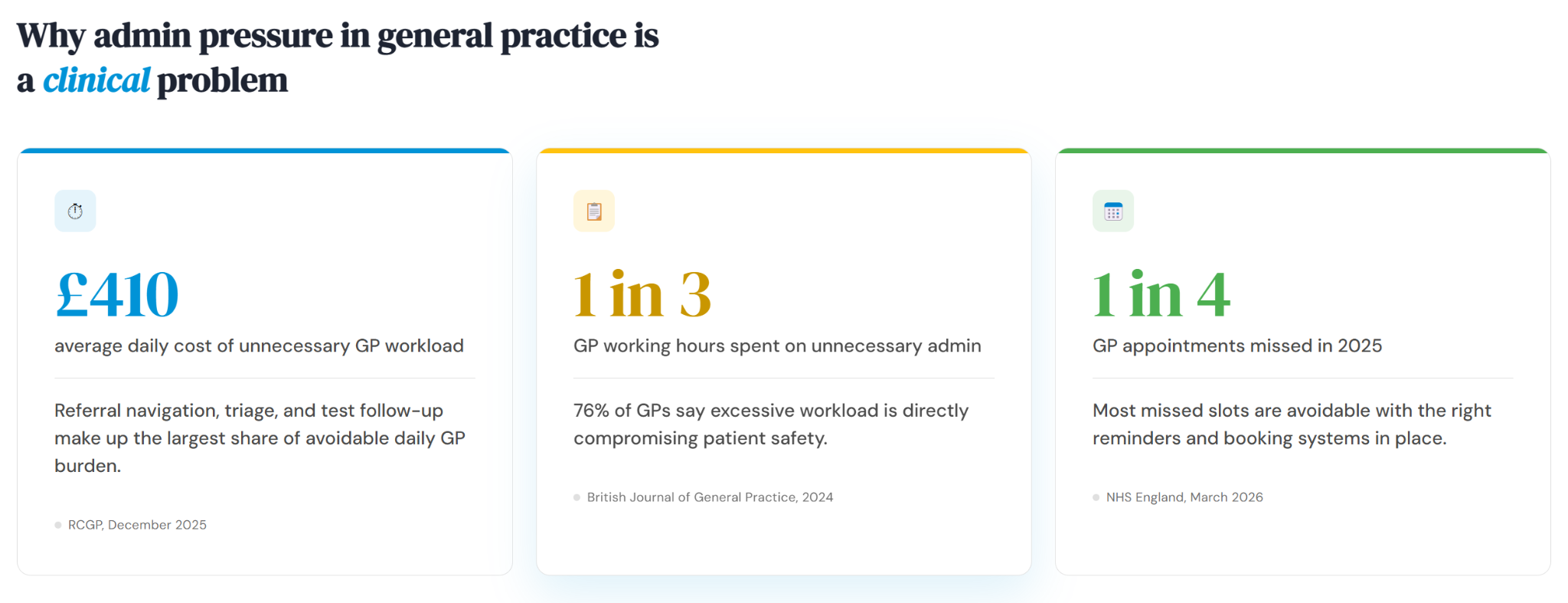
The administrative load in general practice is significant. Unnecessary workload activity costs an average of £410.53 per GP per day, with navigating referral processes, inappropriate triage, and test result follow-up making up the largest portions of that burden.
That is not a small problem. GPs spend around a third of their time on tasks they consider unnecessary workload and bureaucracy. The same survey found that 76% of general practitioners believe patient safety is being compromised by their excessive workloads.
Poor patient management does not just affect you. It affects the people you are trying to care for. Missed appointments cost time and revenue. Fragmented records create gaps in continuity. A compliance failure exposes your GP practice to serious regulatory consequences.
1 in 4 patients missed a GP appointment in 2025, with over 376 million appointments arranged across the year. A significant proportion of those missed slots come down to avoidable causes: no automated reminder, no easy way to cancel and rebook, no friction-reducing system in place.
Getting patient management right is not about adding more processes. It is about making the existing ones work properly.
The four areas where general practice patient management works or fails
1. Patient records
A patient record management system is only useful if it is accurate, accessible, and secure. Paper records and disconnected digital systems both create the same core problem: information gets lost, duplicated, or delayed. A clinician seeing a patient for the first time should not have to piece together a medical history from scattered sources. The same is true when preparing for medication reviews or following up on referrals.
Good electronic health records management means the following:
- A single, complete record per patient, updated in real time
- Custom fields that capture what matters for your specialty
- Secure access from any device, whether you are in the clinic or working remotely
- A clear audit trail that supports both clinical decisions and compliance requirements
When records work well, you spend less time searching and more time treating. When they do not, every consultation carries an avoidable administrative overhead.
2. Scheduling and patient flow
Patient flow management is one of the areas where small improvements produce the biggest returns. A diary full of gaps, late arrivals, and last-minute cancellations is a revenue problem as much as an operational one.
Online booking removes the phone call bottleneck and lets general practice patients book appointments when it suits them, including outside your working hours. Automated SMS and email reminders reduce did-not-attends without requiring any manual effort. Waiting list tools fill cancelled slots before they are lost. For patients who cannot attend in person, remote consultations give your practice the flexibility to deliver care without disrupting the rest of your diary. The result is a better patient experience without adding workload for your team.
None of this requires a complicated setup. What it requires is a system where scheduling, reminders, and diary management are connected rather than handled separately.
3. Patient care plans and clinical documentation
A patient care plan documents the agreed approach to a patient's treatment. It sits at the heart of care coordination, and in general practice, where patients may see different members of a team across multiple visits, it is what keeps patient-centred care consistent. Strong continuity of care in this sense directly influences health outcomes, patients who receive joined-up, well-documented care are more likely to stay on track with their treatment.
Clinical documentation more broadly includes consultation notes, treatment records, referral letters, and any correspondence related to a patient's care. The quality of this documentation directly affects clinical decision making, especially when a patient presents with a complex history or when care is shared with other providers.
Good documentation does not need to be time-consuming. Template-based note taking, pre-loaded forms, and the ability to store annotated images all reduce the time it takes to record what matters without cutting corners on quality.
4. Compliance and data security
General practices handle some of the most sensitive personal data there is. Under UK GDPR, you are a data controller. That means you are responsible for how patient data is collected, stored, accessed, and protected. The ICO's guidance on accountability and governance sets out what that responsibility looks like in practice.
The obligations are not optional and they are not only relevant to large organisations. A breach at a single-practitioner clinic carries the same reporting requirements as one at a larger provider. You are required to have appropriate technical and organisational measures in place, document your processing activities, and report serious breaches to the ICO within 72 hours.
The good news is that the right practice management software handles the technical side of this for you: encrypted data storage, secure access controls, ISO 27001 certification, and GDPR-ready infrastructure built in from the start.
How WriteUpp brings all of this together
Managing records, scheduling, care plan documentation, and compliance through separate tools creates gaps. Information does not flow between systems. Admin doubles up. Things get missed.
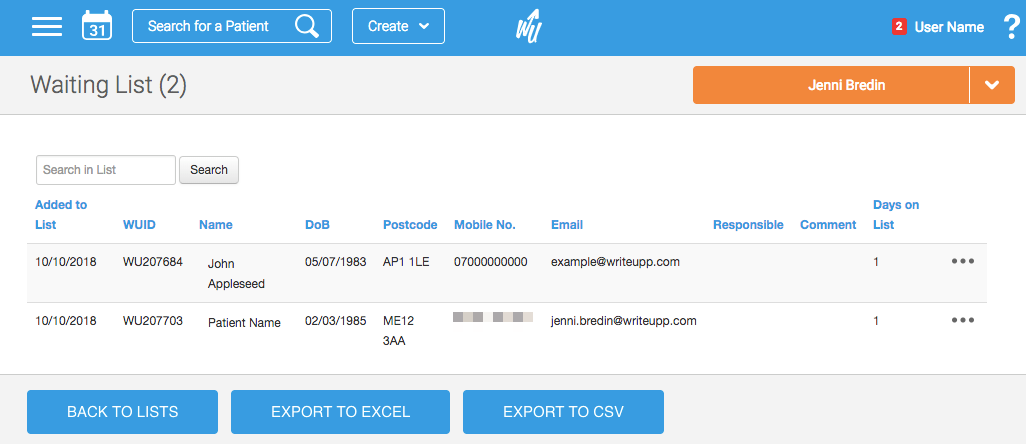
WriteUpp is an easy-to-use practice management software designed for healthcare professionals. Everything connects in one place, so the different parts of running your general practice work together rather than against each other. Here is what that looks like in practice:
- Diary management: a clear, intuitive diary that keeps your schedule organised, reduces gaps, and syncs across your team in real time
- Online booking: let general practice patients book appointments 24/7, with automated confirmations and reminders built in
- Smart forms: send forms to patients before their appointment so clinical information is ready when you need it, not after
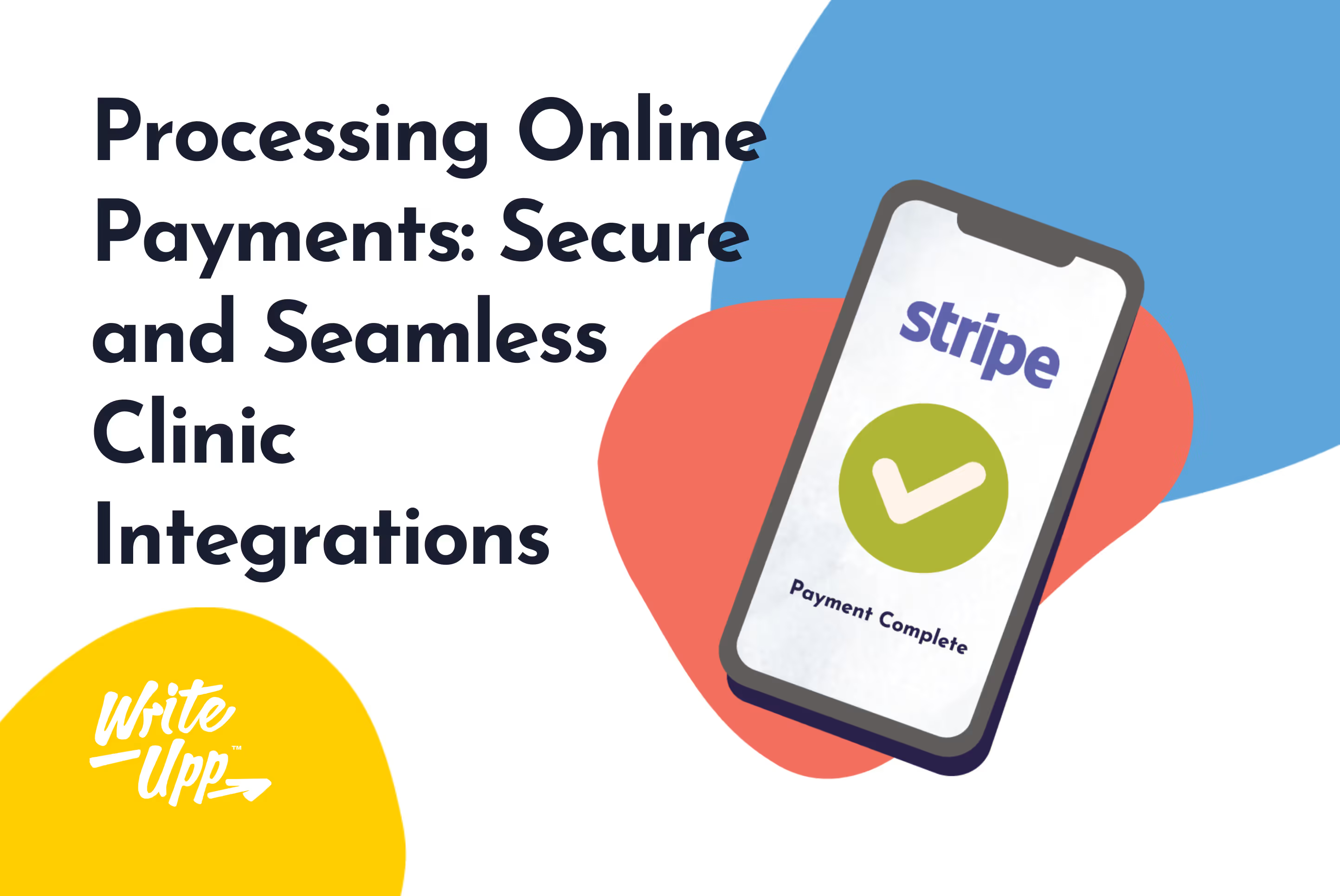
- Payment processing: automated invoicing and Stripe integration mean payments follow appointments without manual chasing
- Security: ISO 27001 certified and GDPR-ready, with encrypted data storage and two-factor authentication as standard
WriteUpp's own research shows that clinicians save 3 to 5 hours per week by using practice management software. That is time that goes back into patient care.
Take control of your general practice
Good patient management does not happen by chance. It comes from having the right systems in place, ones where records, scheduling, documentation, and compliance work together rather than pulling in different directions.
The practices that run most smoothly are not necessarily the ones with the most staff or the biggest budgets. They are the ones that have removed the friction from their day-to-day processes and given their clinicians the time and clarity to focus on patients.
If your current setup is creating more admin than it should, it is worth looking at what a connected system can do differently.
Start your free 30-day trial of WriteUpp and see the difference for yourself. No credit card required.







Join over 50,000 clinicians that we've helped using WriteUpp
Start my free trial